Every spring, schools across Japan hold their annual undokai (運動会) — a sports day that’s about much more than running races and tug-of-war. It’s a reflection of Japanese group culture, school identity, and community participation.
This year, I had the chance to attend the undokai at Seikei Elementary School in Tokyo. As a foreign parent exploring future schooling options, it was eye-opening — equal parts impressive and deeply human.
🏫 About Seikei Elementary School (成蹊小学校)
Located in the lush, residential area of Kichijōji in Musashino City, Seikei Elementary School is part of the distinguished Seikei Gakuen educational group, which spans from elementary through university. Established in 1915, the school is known for blending traditional Japanese values with modern, student-centered learning in a serene and academically focused environment.
🎓 A Legacy of Character and Individuality
Founded by educator Haruji Nakamura in 1912, Seikei Gakuen was born from a desire to move beyond the rigid, standardized education of the Meiji era. At its core, the school emphasizes:
- Respect for the individual
- Development of strong character
- Emphasis on effort over competition
This philosophy lives on at Seikei Elementary, where students are encouraged to:
- Express their own ideas confidently
- Collaborate effectively with peers
- Learn through hands-on experiences and creative projects
The school nurtures independent thinking, kindness, and global awareness — values clearly reflected in their group-centered events like the annual undokai (sports day).
🌿 Campus and Facilities Designed for Learning
In 2008, Seikei Elementary School unveiled its award-winning, child-first campus designed by world-renowned architect Shigeru Ban. The building prioritizes light, openness, and adaptability:
- South-facing terraces for every classroom provide light-filled, flexible learning space
- A dramatic two-story library and hall with a glass façade encourages openness and collaboration
- Biotope garden, indoor pool, and modern tech lab support a well-rounded education
Everything from layout to furniture reflects a commitment to child-centered, experiential learning.
🌐 Global Programs & Language Development
While rooted in Japanese values, Seikei Elementary also prepares students for a global future. Key highlights include:
- English classes from Grade 1, increasing in frequency each year
- International homestay exchanges (e.g., Australia) for upper elementary grades
- Programs aligned with UNESCO’s Education for Sustainable Development (ESD) framework
- Active status as a UNESCO Associated School
This mix of tradition and internationalism makes Seikei a popular choice for returnee families and bicultural households.
🔗 Learn More
For more information, visit the school’s official website:
👉 Seikei Gakuen English Site
🎟️ A Well-Orchestrated Entry
Visitors were welcome — but by pre-reservation only, made online ahead of time. That small detail already hinted at the high level of structure Seikei is known for.
Parents began arriving early, dressed neatly. Mothers wore navy dresses or business-casual outfits. Fathers came in jackets or suits. There were no loud banners, no chaos. Just quiet excitement, perfectly arranged chairs, and helpful staff guiding visitors with subtle efficiency.
🎌 Flag Waving and Cheers from the Older Grades
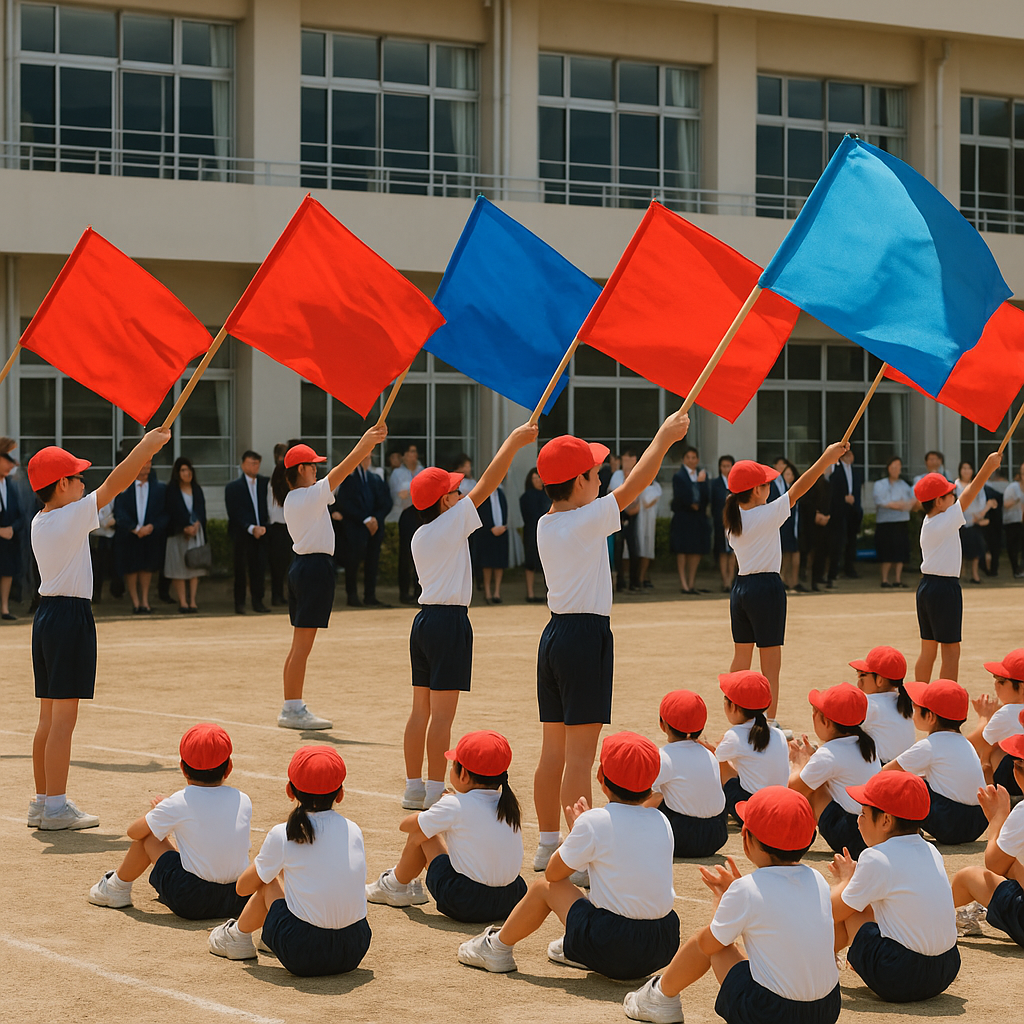
As events unfolded, it was the upper-year students who stole the show — lining up in formation and waving large flags in rhythm, side to side, cheering loudly for their younger schoolmates during the main relay event.
The choreography was simple, but it was moving — a visual representation of what it means to support the group, not just perform for yourself.
It felt ceremonial in the best way. A reminder that everyone has a role, and the older students model what’s expected for the younger ones.
🧒 Tug-of-War: 1st vs. 2nd Graders vs. Teachers
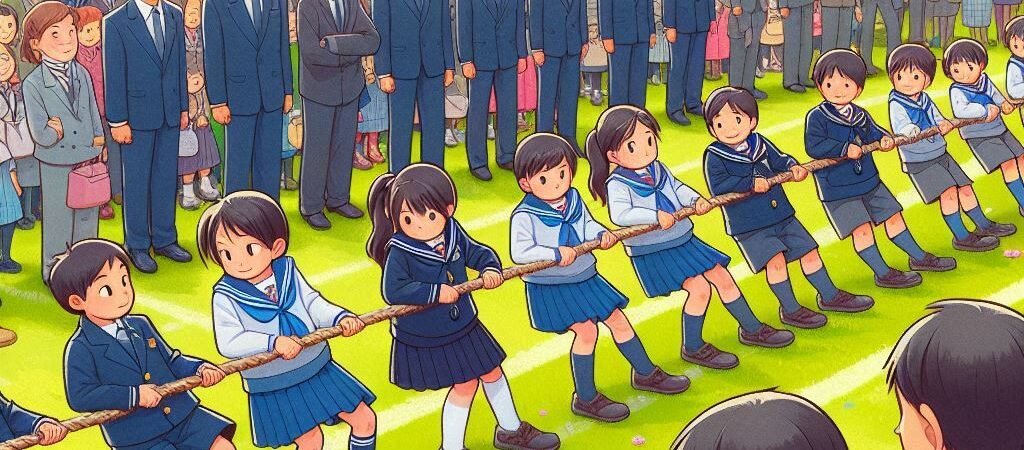
One of the most adorable (and energetic) moments was the tug-of-war between 1st and 2nd graders, and then with teachers! The lines were perfect. The effort was real.
There were laughs, some tumbles, and just the right amount of competitive tension. What stood out wasn’t who won — but how seriously the kids took their role, and how joyfully the parents cheered regardless of outcome.
It was a teaching moment, not just a physical game.
🤷♂️ My Son’s Honest Reaction
We stayed for the first couple hours, and my son — excited at first — began to lose interest halfway through. As a non-participant, the structure and formality didn’t hold his attention.
So we left early.
That moment reminded me: no matter how impressive the event, kids are kids. They’ll explore what fits their age, mood, and attention span. And that’s okay.
✍️ Final Thoughts
Seikei Elementary’s undokai offered more than a glimpse into school life. It gave me a deeper appreciation for how Japanese education uses tradition, structure, and community rituals to shape young people.
Even as a visitor, I could feel the pride, the clarity of roles, and the thoughtful way the school built its culture from the inside out.
And while my son may not have made it through the whole event, I left feeling grateful — not just for the invitation, but for the reminder that education, at its best, is about creating shared experiences that last longer than a single school day.